


Water storage tanks are an essential part of residential and commercial properties, especially in regions with high temperatures and high water storage dependence, such as Oman. Whether it’s an underground tank or an overhead tank, proper maintenance is critical to ensure safe, clean, and hygienic water for daily use.
However, many property owners are unaware that underground and overhead water tanks require different maintenance approaches due to their structure, location, and exposure to environmental factors. Ignoring these differences can lead to contamination, health risks, and costly repairs.
This blog explores the key differences between underground and overhead water tanks, their maintenance requirements, and best practices to keep your water supply safe and efficient.
Understanding Underground and Overhead Water Tanks
Underground Water Tanks
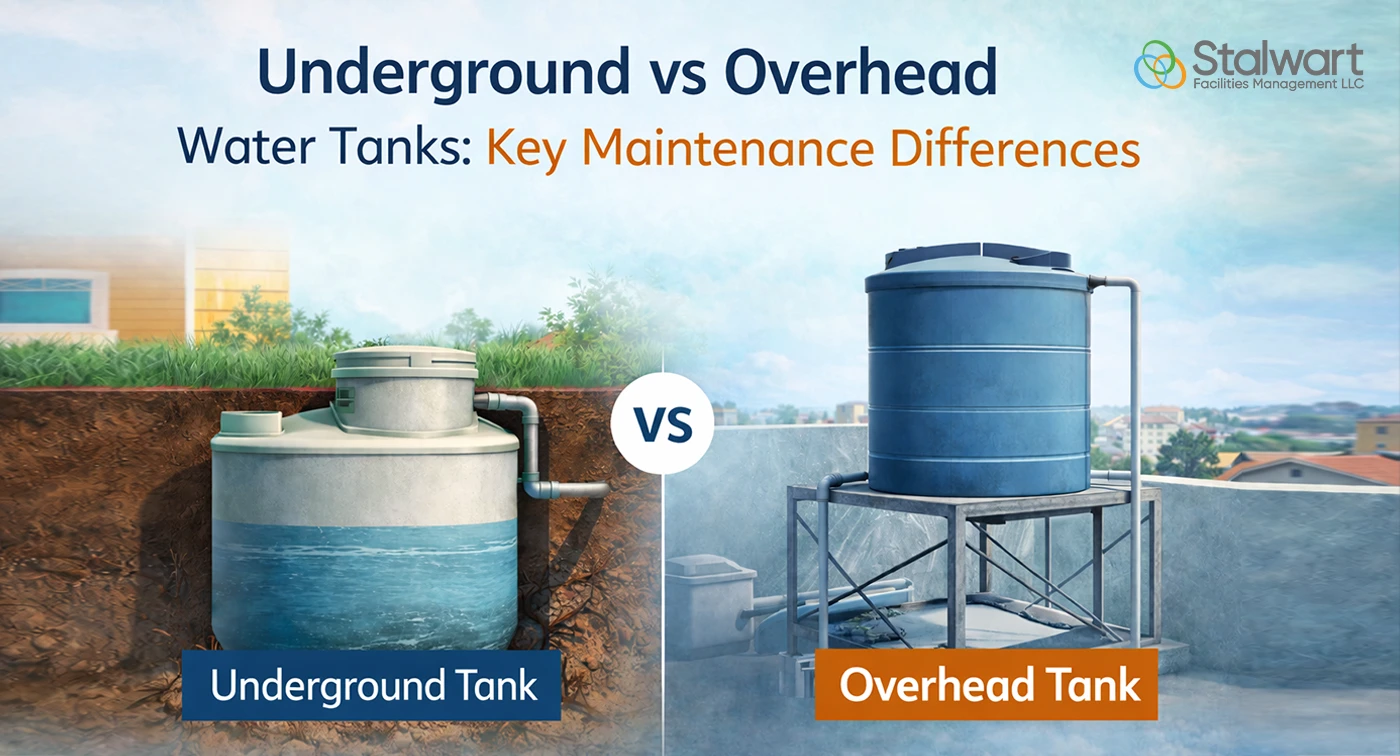
Underground tanks are installed below ground level and are commonly used for large-capacity water storage. They are protected from direct sunlight and temperature fluctuations but are more vulnerable to soil contamination, leakage, and groundwater infiltration.
Overhead Water Tanks
Overhead tanks are installed on rooftops or elevated structures. They rely on gravity to distribute water and are widely used in residential buildings. However, they are more exposed to heat, dust, and environmental pollutants.
Key Differences Between Underground and Overhead Water Tanks
1. Exposure to Environmental Factors
Underground Tanks: Less exposed to sunlight and temperature changes but prone to contamination from soil, sewage seepage, or nearby drainage systems.
Overhead Tanks: Highly exposed to extreme heat, dust, bird droppings, and airborne pollutants.
2. Risk of Contamination
Underground Tanks: Higher risk of bacterial contamination due to moisture, leaks, or cracks.
Overhead Tanks: More prone to algae growth due to sunlight exposure and debris accumulation.
3. Cleaning Frequency
Underground Tanks: Should be cleaned at least every 6 months.
Overhead Tanks: Require cleaning every 3–4 months.
4. Accessibility and Inspection
Underground Tanks: Harder to access and require professional cleaning.
Overhead Tanks: Easier to access but still require safety precautions.
5. Structural Maintenance
Underground Tanks: Need checks for cracks, leaks, and waterproofing.
Overhead Tanks: Require inspection for UV damage and lid sealing.
Maintenance Tips for Underground Water Tanks
- Inspect regularly for leaks and cracks
- Ensure proper sealing to prevent contamination
- Schedule professional cleaning
- Monitor water quality (color, smell, taste)
- Maintain clean surroundings
Maintenance Tips for Overhead Water Tanks
- Clean the tank frequently
- Use UV-protected tanks
- Keep the lid tightly closed
- Install mesh filters at inlet points
- Check regularly for algae growth
Common Water Tank Issues Faced in Oman’s Climate
- High temperatures accelerate bacterial growth
- Dust storms contaminate overhead tanks
- Humidity leads to mold and algae
- Water stagnation increases contamination risk
Why Professional Water Tank Cleaning is Important
- Deep cleaning and bacteria removal
- Safe disinfection methods
- Detection of hidden leaks or damage
- Compliance with hygiene standards
Best Practices for Water Tank Maintenance
- Clean tanks regularly
- Always keep tanks sealed
- Avoid long-term water storage without circulation
- Use safe, food-grade cleaning agents
- Schedule periodic professional inspections
Conclusion
Both underground and overhead water tanks play a crucial role in water storage, but they come with different maintenance challenges. Understanding these differences helps property owners maintain water quality and prevent contamination.
Regular cleaning, proper inspection, and adapting to environmental conditions are essential to ensure safe water for everyday use. Neglecting maintenance can lead to serious health risks and costly repairs.
For reliable and professional water tank cleaning services in Muscat, choose Stalwart FM to keep your water systems clean, hygienic, and efficient all year round.


