


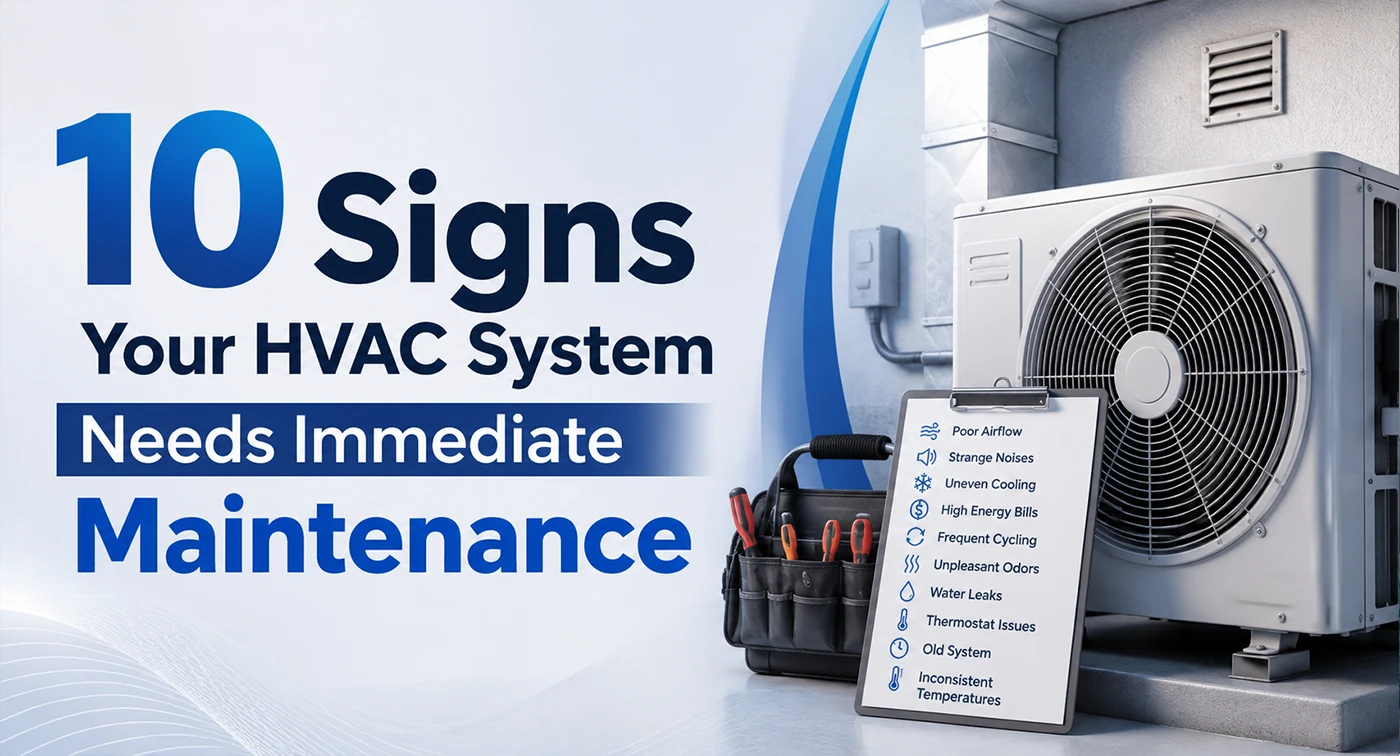
10 Signs Your HVAC System Needs Immediate Maintenance
In Oman’s hot climate, a properly functioning HVAC system is essential for maintaining comfort in homes, offices, retail spaces, and commercial buildings. Whether it’s the peak summer months in Muscat or a warm day elsewhere in the Sultanate, your air conditioning system works hard to keep indoor environments cool and comfortable.
However, like any mechanical system, HVAC units can develop problems over time. Ignoring early warning signs often leads to reduced performance, higher energy bills, costly repairs, and even complete system failure. Recognizing these signs early and scheduling professional HVAC maintenance can help prevent unexpected breakdowns and extend the life of your equipment.
In this article, we’ll explore 10 common signs that indicate your HVAC system needs immediate maintenance and explain why prompt action is important.
1. Weak Airflow from Vents
One of the most noticeable signs of HVAC trouble is weak airflow coming from your vents.
If you notice that certain rooms are not cooling properly or air is barely flowing through the vents, your system may be experiencing issues such as:
- Clogged air filters
- Blocked ductwork
- Failing blower motors
- Dirty evaporator coils
- Damaged fan components
Weak airflow forces your HVAC system to work harder to achieve the desired temperature, increasing energy consumption and reducing efficiency.
What You Should Do
Replace or clean air filters and schedule a professional inspection to identify the root cause of the airflow problem.
2. Rising Electricity Bills
Have your electricity bills suddenly increased despite maintaining the same usage habits?
An inefficient HVAC system is one of the most common reasons for higher utility costs in Oman.
Several issues can cause increased energy consumption:
- Dirty filters
- Refrigerant leaks
- Worn-out components
- Faulty thermostats
- Poor system calibration
When the system struggles to maintain the desired temperature, it runs longer and consumes more electricity.
What You Should Do
Compare recent utility bills with previous months. If there is a significant increase, arrange an HVAC maintenance service to identify efficiency issues.
3. Strange Noises During Operation
Modern HVAC systems should operate relatively quietly. Unusual sounds often indicate mechanical problems that require immediate attention.
Common warning noises include:
- Banging sounds: Loose or broken internal components.
- Grinding sounds: Worn bearings or motor issues.
- Squealing sounds: Worn belts or fan motor problems.
- Rattling sounds: Loose panels, screws, or debris inside the unit.
Ignoring these noises can allow minor issues to become major repairs.
4. Unpleasant Odors from the System
Your HVAC system should deliver clean, fresh air. If unpleasant odors are coming from the vents, maintenance may be urgently required.
Common smells include:
- Musty Odors: Often indicate mold or mildew growth within ducts or coils.
- Burning Smells: May suggest overheating electrical components.
- Rotten Smells: Could indicate bacteria buildup or drainage issues.
In addition to reducing comfort, these problems can negatively impact indoor air quality and occupant health.
What You Should Do
Contact HVAC professionals immediately if unusual odors persist.
5. Uneven Cooling Throughout the Building
If some rooms feel comfortable while others remain warm, your HVAC system may not be distributing air properly.
Possible causes include:
- Duct leaks
- Blocked vents
- Improper airflow balancing
- Failing dampers
- Thermostat issues
Uneven cooling is particularly common in larger villas, offices, and commercial buildings.
What You Should Do
A professional HVAC assessment can identify airflow imbalances and restore consistent cooling throughout the property.
6. Frequent Cycling On and Off
An HVAC system should operate in regular cooling cycles. If it frequently turns on and off within short periods, it may be experiencing short cycling.
Common causes include:
- Dirty air filters
- Refrigerant problems
- Thermostat malfunctions
- Oversized HVAC systems
- Electrical issues
Short cycling places excessive stress on HVAC components and significantly reduces equipment lifespan.
What You Should Do
Immediate maintenance can help prevent premature wear and expensive repairs.
7. Water Leaks Around the Unit
Water around your HVAC system should never be ignored.
Possible causes include:
- Blocked condensate drain lines
- Damaged drain pans
- Frozen evaporator coils
- Excess humidity issues
Water leaks can damage flooring, walls, ceilings, and nearby equipment if left untreated.
What You Should Do
Turn off the system if significant leakage occurs and arrange professional service as soon as possible.
8. Poor Indoor Air Quality
Your HVAC system plays a major role in maintaining indoor air quality.
If you notice:
- Excessive dust accumulation
- Increased allergy symptoms
- Stuffy indoor air
- Persistent odors
- Poor ventilation
Your HVAC system may require maintenance.
Dirty filters, contaminated ducts, and neglected coils can circulate pollutants throughout the building.
Why It Matters in Oman
Dust and sand are common environmental challenges in Oman. Regular HVAC maintenance helps prevent these contaminants from affecting indoor air quality.
9. Thermostat Problems
Sometimes the HVAC system itself isn’t the problem—the thermostat may be causing performance issues.
Common symptoms include:
- Incorrect temperature readings
- System failing to start
- Constant running
- Inconsistent cooling
A malfunctioning thermostat can make even a healthy HVAC system operate inefficiently.
What You Should Do
A technician can inspect thermostat calibration, wiring, and programming to ensure proper operation.
10. HVAC System Is More Than One Year Overdue for Maintenance
Even if your system appears to be working properly, skipping routine maintenance can lead to hidden problems.
Over time, dust accumulation, worn components, and declining efficiency can develop without obvious symptoms.
Professional HVAC maintenance typically includes:
- Filter cleaning and replacement
- Coil cleaning
- Refrigerant level checks
- Electrical inspections
- Thermostat testing
- Airflow assessments
- Duct inspections
Preventive maintenance often identifies issues before they become costly emergencies.
Recommended Maintenance Frequency
For Oman’s demanding climate, HVAC systems should ideally be serviced at least twice per year, particularly before the summer season.
Why Immediate HVAC Maintenance Matters
Delaying maintenance can result in:
- Higher electricity bills
- Reduced cooling performance
- Poor indoor air quality
- Frequent breakdowns
- Costly repairs
- Shorter equipment lifespan
Routine inspections and preventive maintenance help keep HVAC systems operating efficiently throughout the year while minimizing unexpected disruptions.
Tips to Keep Your HVAC System in Good Condition
In addition to professional servicing, building owners can take several steps to maintain system performance:
- Clean or replace filters regularly
- Keep outdoor units free from debris
- Ensure vents remain unobstructed
- Monitor energy consumption trends
- Schedule seasonal inspections
- Address unusual noises or odors immediately
These simple practices can significantly improve HVAC efficiency and reliability.
Conclusion
Your HVAC system often provides warning signs before a major breakdown occurs. Weak airflow, rising energy bills, strange noises, unpleasant odors, uneven cooling, water leaks, and poor indoor air quality should never be ignored. Addressing these issues early through professional maintenance can save money, improve comfort, and extend the life of your equipment.
Regular HVAC preventive maintenance is particularly important in Oman, where HVAC systems operate under demanding conditions for much of the year. If you notice any of these warning signs, it is best to schedule a professional inspection before the problem worsens.
For reliable HVAC maintenance, inspections, and facility management solutions in Muscat, businesses and homeowners can trust Stalwart FM to keep their cooling systems operating efficiently throughout the year.


